Showing posts with label children. Show all posts

Sunday, December 14, 2014

NANNY OF THE MONTH, CAROL


Every month, Caring Nannies likes to share one of the nannies who have taken a job with one of our wonderful families. This month, we chose Carol, who has faithfully been a nanny for one of our families for the past two years two days a week. Her new job is another two day job....read on...Meet December Nanny of the month, Carol

Carol is a warm, vibrant and highly dedicated nanny with over six years of nanny experience with three families! She started babysitting at age 10. With a medical degree, she was working at a very busy medical clinic as well as setting up specialty clinics in Minnesota until her family relocated to Phoenix. “It was very stressful and when we moved to Arizona, I just wanted to get out of the healthcare field and be able to play and just have fun, caring for children. No stress, no drama. I just love nannying-it's just the best,” she confided. In the Fall of 2012, we placed Carol as a nanny with a 3 year old girl two days per week, and just this week, she took an additional part-time nanny job for two days with a two year old and a newborn.

Carol loves children, and it shows! “They’re so much fun!” she shared. ‘Kids need to feel special. It’s a lot of work, but its so much fun. It’s about building a relationship with the children and the parents. If the children are happy, the parents are happy, and then I’m happy. it’s a win-win”. She’s fun-loving and active with children in all her nanny positions, diving into the pool for toys, playing hide 'n go seek, tag, bike riding, reading, walks, exploring, and encouraging independence as much as possible. “One key is letting them win games. It makes them feel so special when the parents come home and they say, ‘Mom, I beat Carol at ‘Pig’!’”

Carol is flexible, and has done extensive travel with past families. Carol's own family works around their schedule. Her current family flies her to Chicago frequently and once they brought Carol's 10 year old daughter along so her six year old charge would have someone to play with and they had a blast: "We went to the park, the zoo, we walked miles. My nanny job works so well. My employer is the kindest lady ever! She’s been so kind to me. This nanny position has been a really good thing for me. I don't look at it so much as a job. I love it and do whatever they need me to do.” 

With her young Kindergarten charge in tow, Carol can be found exploring on a Saturday with a backpack filled with water and snacks and no plans. “Its’ an adventure and we see where we end up. I like to come up with fun things, like: ‘Today we're going to see how many parks we can play at’".  They call it park-hoping and found 6 parks in one day. “She’s so smart for her age,” remarks Carol about her charge. We're always cooking and baking, and doing tons of crafts. We go to Michaels, pick up craft items, do painting, or make cards. The parents went off for a weekend and we put paint on her hands and feet and prints all over a paper and we hung it up with the words: 'Happy Birthday, Dad.'” 

Carol is compassionate, patient, adventurous, cheerful, and her medical background makes her extra safety-conscious. She loves teaching sports skills like hitting a ball with a bat or swimming. A favorite memory was a little fellow who loved basketball. Carol lowered the net so he could be successful. Carol is experienced with infants through school age, and is a pro at potty training. She’s happy to help with homework, do family laundry, straighten up the house, menu plan, grocery shop, run errands and is a gourmet cook! 

Carols own daughters are 10, 15 and 18 year old and her husband travels a lot. “My kids are pretty self-sufficient, and normally I’m home by 4-5 in the afternoon. Her family loves to go camping and travel in their motor-home. This summer she took her paraplegic cousin on a month long motor-home trip, and cared for him 24/7 with her 10 year old. Her close-knit family loves any kind of outside activities, camping at Lake Pleasant, and other favorite places. Thanks for all your great work, Carol, and congratulations on your new position!


Beth

Monday, November 24, 2014

7 SECRETS TO KEEPING A GREAT NANNY

nanny, babysitter, housekeeper, sleep trainer, newborn specialist

Some families keep their nannies for years, while others go through a string of nannies, leaving children confused. It's a lot of work finding your dream nanny, but the hardest part is after the hire, developing a strong ongoing relationship. Think about your own work environment and how your boss treats you. Realize that she's a professional in her own right.

1. Does she know you appreciate her? Express your appreciation to your nanny out loud frequently, and give her respect and support, especially in front of the children. Don't allow your children to be disrespectful to her and never speak unkindly to her. Zoe from Unnecessary Wisdom tells the story of her own part time nanny job and a boss who hosted an executive company Christmas party. She invited Zoe to attend and hired a sitter for the event. She raised a toast and asked her husband and Zoe  to stand, announcing: “To my husband and Zoe – the two most important people in my life. Without you, I wouldn’t be able to do what I do.” Zoe recounts her undying devotion to this family for years afterwards.

2. Are you really Communicating? Take time to establish regular communication routines with your nanny, daily, weekly, monthly and annually. Take 15 minutes weekly to review her plans and schedule for the following week. Share developmental goals, ideas for the household, your frustrations, and listen to hers as well. Initiate a Nanny Log and ask her to make notes daily and actually read them, occasionally leaving notes of your own or give written praise for a job well done.

3. How do you resolve conflicts? Think before you speak. Focus on creating a win-win solution, not on being right. How can she effectively play with your children, dance with them, sing to them, cuddle with them, put them to sleep if you yell at her or give her the cold shoulder? The fingerprints on the microwave may be bothering you. You know it's silly and not worth mentioning, because you're OCD, and you don't want to rock the boat because she's home with your baby all day. She already knows something is wrong, but can't get you to tell her. The baby knows too. It could be something more serious, and I know it's hard for you to bring it up, but after the first time, it gets easier. The process of resolving conflict will actually bond you both closer together when done quickly, before it festers. Take care of it the same day it occurs, or as soon as possible.

4. Are you micromanaging? If you've done your homework and found a nanny you can trust, then trust her. It's not fun being under a critical eye. A  good parent draws forth the qualities they envision for their child. Likewise, your faith in your nanny, knowing she'll do well, creates confidence and a desire to please you even more.

5. Are you adding more duties and hours? Don't keep adding more chores or hours without additional compensation.

6. Is she bored? Encourage her to get out and go on playdates, trips to the zoo, the park, the Children's Museum or the Butterfly Wonderland. Being a nanny is isolating. The interaction and stimulation will benefit your child.

7. Is your pay and benefits package competitive? If you're able, are you giving her raises when you get a raise at your job?

Beth

Saturday, July 19, 2014

BACK TO SCHOOL TIPS

after school nanny, children, school, Tempe, Scottsdale, Phoenix, Gilbert, Chandler, Tempe, Paradise Valley, glendale
Getting off to a good start can boost children’s confidence, behavior and outlook socially and academically. The shift from summer to Fall can be a tough transition for both children and their parents, with greater structure, more activities and more stress. Help your children manage the changes by planning ahead and staying positive. Check out our tips to make it easier for the whole family.
Re-establish routines - take a week or two to gradually move up bedtime and wake-up time and let them practice getting up, dressed and eating breakfast earlier. Add in bedtime reading and chores if you didn't do this during the summer. Talk to your child about the benefits of going to bed on time so they have energy the next day. Even preschoolers can learn to set an alarm clock to get up in the morning. Praise them for being a go-getter when they get up.

Create a launch-pad - a designated area for backpacks lunch boxes and important notices and homework papers to avoid last minute scrambles.

Set a time and a place for homework - avoid daily battles by setting up a time and place for homework. The best area is the kitchen or family room so they can be monitored and encouraged. Make sure there’s good lighting and room for books and resources. Plan ahead to be available during the homework hour to head off frustration and make sure the work gets done.

Mark your calendar and plan to attend “Meet the Teacher Night” - It is August 1 in Tempe, check your school website for other districts and attend to meet your child’s Teachers, the Principal and other staff. Arrange for a babysitter now, if necessary. Walk through the school if it is a younger child or a new school, and find their classroom, locate lockers, visit the lunchroom, and encourage your child to ask questions.
Here are the first days of school for some local districts:

Phoenix July 20 
Chandler - Monday July 21
Phoenix - Wednesday July 30
Tempe - Tuesday August 5
Gilbert - Wednesday August 6 
Scottsdale - Wednesday August 6
Paradise Valley - Friday August 8
Glendale - Monday August 11

Clear your schedule for the first week of school and put off business trips, extra meetings and avoid bringing work home to you have time to help your child get used to the new  schedule. Have some planned frozen leftovers ready so dinnertime is easy.

With a few of these strategies in place, your first days of school will create a good start to the school year and make for academic success all year. 

If you need an extra hand, consider hiring an after school nanny. We're currently recruiting candidates who will pick children up from school, fix a nutritious snack, help with homework, throw in a load of laundry, prep dinner, get the kids in the car with mouth guards, clean uniforms and socks, and drive them to sports practices or appointments. We take photocopies of their Driver's Licenses, three year MVD Records and current Auto Insurance when they interview. When checking references, we ask prior families about their driving habits.They’re happy to grocery shop or pick up the gift for the weekend birthday party. Expect to pay $16-$18 per hour and we require a hour hour minimum per visit. Click here to fill out a Family Application. and Jenny, our Family Placement Counselor will give you a call to answer your questions.


Saturday, June 21, 2014

WHAT AGE SHOULD CHILDREN START SWIM LESSONS?

babies, swimming, drowning, nanny, babysitter
Drowning is responsible for more deaths among children 1-4 than any other cause except birth defects. For children ages 1-14, drowning is the main cause of accidental death after car accidents.

There are three main causes of drowning.

1.Lack of swimming ability. Formal swimming lessons can start with babies, and for years, pediatricians recommended age 4. New studies suggests the earlier the better. Studies also point out other benefits, such as close bonding with parents or caregivers and getting ahead in cognitive, physical, social and emotional development 

2.A Lack of barriers. Pool fences which are four-sided, separated from the house and yard reduces the risk of drowning by 83% compared to three-sided fences, so the pool is accessible from the house.We recommend our trusted partners at AZChildproofers, a local family owned and operated pool-fencing and Childproofing company. Locked and spring-loaded gates prevent children from getting into the pool area without an adults knowledge. We recommend 

3.Lack of close supervision: Drowning is quiet and happens quickly, even in the presence of pool-watchers, adults and lifeguards. Any pool party needs a designated Pool-watcher with a special shirt or hat. This job needs to be rotated every 15 minutes. This May, even 13 and 17 year old teenagers drowned in pools, one during a party.

What does research tell us?

nanny, babysitter, parents, toddlers, babies
1. Swim Lessons help. Formal swim lessons reduces the risk of drowning in children ages 1 to 4. Sandra Jackson has been teaching Survival Swim Lessons for over three years, and we interviewed her to find out what works. She does 12 to 15 minute swim lessons in parent’s back yard pools for four to six weeks, four days a week. She teaches babies, toddlers and preschoolers to swim, roll to a float, and float on their backs. They practice getting to the side of the pool from the center. Call Sandra at 480-221-0271 to schedule private or group lessons.

2. Every second counts--learn CPR. Nannies have to get certified every two years, and parents and grandparents should too. If you mention Caring Nannies, AERT gives classes for only $24. Too busy? Review a video and practice on a doll or stuffed animal.

3. Remove toys from the pool area when swimming is over. Toys attract children. Pick up floats, balls and toys and store them away from the pool.

4. Practice “touch supervision” be within arms length of your child

5. Don’t use air-filled toys, noodles or water wings for life jackets. They are not designed  to be life jackets.

6. Don’t drink while supervising children.


#nanny, #babysitter, #babynurse, #housekeeper
Beth and her five kids


Saturday, May 17, 2014

WHAT’S THE DIFFERENCE BETWEEN A NANNY AND A BABYSITTER?


NANNY BABYSITTER parents, children
   The easiest way to tell the difference between a nanny and a babysitter is to give some examples. If two children are fighting over a riding toy, a babysitter will simply swoop it up and distract the children with another activity. 
     But a Nanny will see this as a learning opportunity and will as questions, like: “What did you do?” or “What was wrong with that?” or “What would have been a better way to handle that situation?” or “Can you tell your brother you’re sorry and ask him to forgive you?” to get the children thinking about their behavior and how they could have done things differently. She is thinking about the whole child, their character, manners, and values. 
     A Nanny comes in with a plan. She’s thinking about small muscle, large muscle development, social, emotional, cognitive, and language development. She’s thinking about the age the child is now and what to expect three months out, and how to accelerate development through art and crafts, books, asking questions, outdoor activities, finger plays, music, books and field trips. Her main priority is the child’s character, especially to develop qualities like creativity, attentiveness, kindness, honesty, courage, self-discipline resilience and a joy in living, all foundational to success.

nanny, babysitter, parents, children
     If a two year old discovers an earthworm under some new sod, the Nanny may start a worm farm in a quart jar, get a library book about worms, do art projects about worms and do music and movement and talk about how important worms are to us. (There would be no food on the earth without the hard work worms do for us!)
     If a toddler is eating blueberries, she may ask him to count them, and count agin when one is eaten. If he can cut a banana slice in half, she’ll be talking about halves and quarters.
     A Nanny has years of professional experience and possibly an educational background and sees herself as a teacher. She usually becomes a part of the family and is considered almost a third parent. She may have more experience than the parents and can give parents insights about ages and stages. She may spend more time with the child than the parents and keeps a log or reports about the child’s day. She works full or part time, but has a regular salary or hourly pay, and gets paid 52 weeks per year. She usually gets paid holidays and vacations and has a written working agreement with her family. This is a career for her. 
     A babysitter usually comes when needed, is on call, and keeps the child safe, fed and puts them to bed. She is paid hourly. 
     If you are mostly an at-home parent and only work 10-15 hour per week, a babysitter may be a good option for your household. But if parents are both in demanding full-time positions, a nanny can be an essential element of your child-rearing strategy.

     One more difference. A Nanny oftentimes has down time during naps or when a child is in preschool. She may throw in a load of laundry or get dinner started. She will often grocery shop or pick up a gift for the weekend birthday party. This way, the family has more quality time to capture those fleeting cherished relationships. 

Beth Weise
beth weise, nanny, scottsdale, babysitter, Phoenix, Paradise Valley, Chandler


Saturday, May 3, 2014

LEAVING YOUR CHILD A LEGACY OF LETTERS


When you have a child, you start thinking about what you want to leave them. Naturally, we think of a college education, money or a home. But far more important, is the legacy of values you give them. My friend Marjorie Desmond, a Phoenix estate planning attorney, suggests writing a legacy letter for your children. Since we don’t know what will happen tomorrow, she recommends parents write a letter for a child or grandchild’s home-leaving, graduation, a special birthday, wedding, birth of their first child or your own funeral. Marjorie’s mom, now deceased, wrote her a poem when she left home, and now with her daughter getting ready to leave for college, she was able to share this poem with her.

marjorie desmond, family estate lawyer, phoenix

Write a legacy letter
. Think of everything you’d want to tell your spouse and children if you knew you had two weeks to live, and put it all in a letter to them. Tell your daughter, or granddaughter what you felt when she was born. The kind of man you want her to marry and why. You express to your spouse how happy they've made you and your desire for them to be free to be happy when you’re gone.
Share the meaning of your life, beliefs and the lessons life has taught you. This can be done in a letter, an audio recording, or a video. You can make a scrapbook with photos and written stories. You can say at your son’s graduation, “Scott, my heart overflowed with joy at the realization of how all your hard work is now paying off. I am so proud of you!” This part of the letter is a way of telling your unique story, including your accomplishments, how you’ve tried to live your life and what your family will take from you. You can encourage your children to make wise choices.


Include your family history.
 “My Grandpa was born in Oklahoma territory and we know very little about his family history,” lamented Marjorie. “We see 69% of people die without any estate planning at all. The most important part of a legacy is the values, words of wisdom and life lessons you carry with you. You don’t want your family to learn the hard way.”

Marjorie has a passion to help other families because of her own legacy. Her Grandpa, a Slovenian immigrant, served in the 
Army Air Corps during WWII as a medical doctor. In early 1945, his plane crashed and he died. At the age of seven, Marjorie’s Dad was told, “You’re the man of the house now,”and he helped raise his younger brother. Because an uncle received the death benefits, Marjorie’s grandmother had to live frugally. She went back to school and become a teacher.  Marjorie’s dad was also a medical doctor who was drafted to serve in Vietnam.  Thankfully, he returned safely, but life is often uncertain.  Don't miss an opportunity to share your values with your family. This is why Marjorie is passionate about helping other families plan their legacy. From the age of eight, she knew she wanted to be a lawyer.  She has a passion for making sure we pass on what we want to, to whom we want, when we want, and these things we pass on start with our values. 
“No one is getting out alive,” Marjorie reminded me. “Don’t you want to leave your child a love letter?” 
If parents take the time to write these legacy letters, they’ll be much more likely to express gratitude and joy on a daily basis to their loved ones.

Beth                                            

Saturday, April 26, 2014

GIVING YOURSELF TO YOUR CHILDREN


How can parents guarantee that the values they are diligently pouring into their children will stick?
How can you ensure that your children won't be inclined to exchange the blessings of your home life for the cheap thrills they will surely be offered, that will take them decades to recover from?

Talk to your children.
This may seem obvious, but it’s surprising how many parents don’t do this. While we need to be careful not to speak with them like they’re our buddy so they don’t respect us, and we need to speak to them on their level, yet we need to be friends with our children so that they feel free to come and talk to us about anything. If they’re having a problem understanding why your family does things in a certain way, talk to them about it. If they’re acting oddly, talk to them. Talk to them and listen to what they’re telling you. Give them undivided attention. We want our children to share their hearts without feeling that we’ll condemn them. If they can’t talk to you, you can be sure they’ll find someone else to talk to.
Give your children a sense of purpose for their natural talents.
Sometimes, children have an aptitude for a calling that is not deemed acceptable by the parents. It’s our job as parents to spot the gifts and talents that our children have and nurture them and channel them in the right direction. Failure to do this can leave children bitter. Guard against having unrealistic expectations for your children.


Encourage your children.
Encourage means to give courage. Do this by loving them exactly the way they are. Praise them, not for the things they accomplish, but for the character qualities displayed while they achieved something. “You worked really hard on your room today!” or “your diligent practice paid off  when you scored today.”

Give yourself to your children.
It is possible to go days and even weeks without realizing you’ve been so wrapped up in your “adult stuff” that you’ve hardly even noticed these little ones around you. You suddenly notice that they’re longing for your attention but you’ve been too busy or selfish to give them what they want most. Ask them to forgive you and resolve to give yourself to your children. Go play with them. Get down on their level. Cuddle with them. Tell them how much you love them. Treat them as real people with thoughts, feelings and hopes. Be interested in them. If you lose your temper, ask them to forgive you. Play together as a family. Wrap them in a blanket and tell them they are your little burrito and that you’re going to eat them!


Roughhouse with your kids.
Here's a great article for you to check out if your parents didn't roughhouse with you. It gives them resilience, makes them smarter, builds social intelligence, teaches them morality, gets them physically active, and builds the father-child bond.

Our children should so come to love the atmosphere and fragrance of joy and hope that resonates through our homes and their lives, that the thought of exchanging those blessings for cheap thrills leaves them frigid.

Beth                                            

Wednesday, April 16, 2014

TEACH YOUR CHILD TO YELL AND TELL: PREVENTING CHILD SEXUAL ABUSE

protecting children, child sexual abuse, nanny

1 in 10 children will be sexually abused before their 18th birthday.
It can happen to anyone - even a child you know and love.
Even your own child. Abuse creates shame, confusion, fear, and embarrassment
These factors enable a culture that perpetuates continued abuse.
The average serial pedophile will molest 400 children during his lifetime. Molesters are regular people with average looking faces. 90% of all molestations are committed by a family member or friend. It’s important to teach your child to be distrustful of strangers but we also need to teach them to be on guard with friends, brothers or even Granddad.
Child molestation is on the rise due to online pornography, especially child pornography.
It’s understandably uncomfortable for parents to talk to their children about this unthinkable situation. We want to protect their innocence, so we don’t warn our children, leaving them defenseless against a cunning, familiar person.
yell and tell, debbie pearl, protecting children, nanny
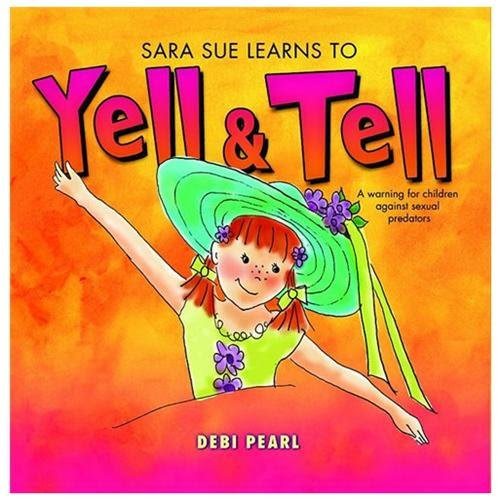
Debbie rl author of Samuel Learns to Yell and Tell and Sara Sue Learns to Yell and Tell: A Warning For Children Against Sexual Predators says, “In every area of life, it is usually understood that those prepared are usually spared”. We highly recommend that every family purchase one of these books and read them and talk to your children about them regularly. By teaching children about their bodies and talking openly about sexuality and boundaries, a child will be more equipped to tell you if something is making them uncomfortable. A child predator loses his power when he loses his cover. So “if all children know that they would be heard and protected when they yelled and told, then many predators would never go child hunting.” Debbie Pearl.
In Darkness to Light, a website dedicated to protecting children from sexual abuse, 5 steps to protecting children are outlined. Research and learn all you can, or take their online course.
nanny agency, Scottsdale, Chandler, child abuse
  1. Learn the facts-Read Yell and Tell to your children every few weeks to keep the ideas fresh in their minds.
  2. Minimize the opportunity-Our children are given to us to protect and nurture. They need us. Predators look for the most vulnerable. Ask questions before and after leaving your child with someone.
  3. Talk about it-Tell your children every day, “I love you and want to keep you safe, so always tell me anything that needs to be told.”
  4. Recognize the signs-Ask questions. Watch for signs of fear and anxiety in your child concerning  friends or family
  5. React responsibly-If you react with anger or disbelief, the child will shut down and think it is their fault and internalize damaging guilt and shame.
Caring Nannies is starting a pilot program to to come alongside families and provide the Darkness to Light program to nannies for another layer of protection.

“Your children need to know that they can come to you at any time and any place and that you are ready to listen and take action to protect them. They will not understand this naturally; it is your responsibility as a parent to effectively communicate this message.” Debbie Pearl.


Beth                                            
Beth Weise, Caring Nannies, nanny, parents, children

Monday, April 7, 2014

TECHNOLOGY AND CHILDREN'S BRAINS


I interviewed my daughter Erika Frazer,  a new RN and the mother of a four year old and a 2 month old, after they made a seismic change in their household. I was surprised when she told me that her husband Steve was behind it all.
What made you suddenly decide to turn off all technology? Not just the TV, but the iPad and the cell phone?
“I’d been hearing about the negative effects of technology, and kept it all off during the day, but we were used to the TV being on a lot and Dad had his iPhone and iPad in hand. 
He watched a Ted Talk about the effects of TV on children ‘s brains.”http://www.wimp.com/mediachildren/ See more below.
“Since seeing the report, we only turn on the TV after kid’s bedtimes."

What about youtube videos about nature and science?
After being off technology for two weeks, Steve let her watch  some educational youtube videos about insects for about 10 minutes one Saturday and her attitude and demeanor changed noticeably. She became demanding and whiny.

Steve and Mia

So what are the results with your four year old? Amazing.! She's more subdued. Naps had been a problem for the past year or longer. She wouldn’t nap, even though she was tired. She was hyperactive, demanding and whiny. Now, she’s able to shut down enough to take naps every day, and she sleeps all night in her own bed. Before, she was constantly coming into our bed at some point in the night. 

Did you make any other changes during this time? No, we’ve always had a fairly good schedule for eating, bedtime and naps, and we’ve always had a  healthy diet with limited sugar. Most recently, we’ve also eliminated all sugar for her.
Is there any place for TV in your family now? Yes, recently we all sat down to watch Frozen, and had popcorn, and laughed and talked about it together. So we may do something special like that once or twice a month. After two weeks, I watched for a program that is slower paced, like Sheriff Callie, with no flashing, fast-paced backgrounds, up to 30” minutes a day. She's still very active, that's normal for her, but before, she was feisty and overactive. 
What does she do instead? Now she’ll sit down and look at books all on her own for a half hour and she’s just generally more focused. During the baby’s nap we'll do one creative project and then one dot to dot or work on numbers. She seems to be more absorbed in what she’s doing, and morerelaxed. She’s able to sit and play with clay for an hour. The big thing is that Dad's on board, which makes all the difference. The change is phenomenal. We’ve been taking a family walk every night. Every day Steve comes home and he wants to take a walk because he’s wearing a fitness band on his wrist and he wants to log in miles for his team. It makes all the difference!

More about Dimitri Christakis’ TED Talk:  


 Prolonged exposure to rapid change during the critical period of brain development, preconditions the mind to expect high levels of stimulation, creating  inattention in later life. Children are now expecting a reality that doesn’t actually exist. Baby Einstein is a good example of this.

The more children watch TV before the age of three, the more likely they are to have attentional problems. Specifically, for each hour they watch TV, the chances of them having attentional problems increases by 10%. The more cognitive stimulation parents or nannies do, such as reading, singing, going to a museum or zoo, reduces the chances of attentional problems by about 30%.


Beth                                            Erika

Saturday, March 8, 2014

MUSICAL TRAINING AND CHILDREN'S BRAIN DEVELOPMENT

Hard Wired for Music  
 
Research shows that musical training affects brain development in young children. We are hard wired from birth for many things: language, physical development, social-emotional skills and . . . music.
Children are born music makers!  Children are born to sing and move; infants even as young as a few months of age can show rhythmic and tonal responses to music. Babies will often coo or sound on the resting tone of a song (usually the last note).  Toddlers can bounce to the beat and preschool age children can learn entire songs.  If this is so, why do we have such a large amount of adults who do not feel comfortable singing “Happy Birthday” or dancing in public?  The answer lies in a child’s early childhood years.
Little musicians need to be musically nurtured to develop their potential and research shows that it only takes a few years of early Musical training to benefit the brain later in life

It is true that a child who is exposed to many languages will gain the phonemes of the many languages and conversely, a child who is not given adequate verbal stimulation will grow up with a limited vocabulary.  Similarly, to develop musically, a child needs to be in an environment with a wide variety of musical experiences.  The easiest and most natural time for a child to gain their basic music competence is between birth and age five.  During these years, the window for developing accurate rhythm and singing in-tune is wide open.  If a child’s musical atmosphere in their early years is filled with rich music experiences, a child will be fortunate to grow up with all the music potential they are born with!
Children get their disposition for being a music-maker from their parents.

How do I nurture this inborn music in my child?  Many parents are worried that they themselves are not musical and might destroy their little one’s possibilities of being a confident music maker.  Actually the very opposite is true.  A child gets his disposition to be a music maker by seeing the grown ups in his life joyously make music.  If your child sees you having a blast singing and cutting up the rug, they will see it is safe and they may even imitate you.  Parents are the best music models for their children!
Ways to nurture your child musically.

There are many easy ways to incorporate music into your child’s life:
  • Sing, sing, sing!  Sing in the car with the radio, make up songs (or change the words to familiar songs) about whatever you are doing with your little one, changing diaper, going to the store, eating some broccoli.  Lullaby time can be the most precious time, singing your child off to sleep with love.
  • Dance, dance, dance!  Put on your favorite dance music and move your bodies. It’s fun to invite friends over and dance together.  While playing a CD in the car is a good, your child is buckled in tight and can’t get the large movement experience that is important for rhythm development.
  • Play, play, play!  Get out the pots and pans and have a jam session to some fun and inspiring music that you enjoy.  Wooden spoons on plastic bowls and shakers of dried beans in a sealed up water bottle can make some interesting sounds for children experiment with.  Children benefit by having different sensory experiences of tapping, shaking and scraping.
If you find yourself wishing for more ways to play with your child with music, join one of the great early-childhood music programs in town.  Children learn best when they are in a relaxed atmosphere that is non-performance oriented, developmentally appropriate and lots of fun for both the children and the adults.
Active music making is a whole brain experience.  It helps children regulate their emotions; it can soothe the soul and sometimes bring peace to an over-cranky toddler.  Lastly, music is a meaningful way to bond with your child.
Kathy Rowe from Phoenix Music Together
With a MA in music education, Kathy plays flute and has joyfully taught over 20 years of music in a wide variety of settings: K-8 general-vocal education, private lessons, as well as band and choir. She discovered the joys and importance of early childhood music while working with kindergarteners in the Chicago area and noticing how so many children enter school unable to find their singing voice or move with accurate rhythm. As the founder and director of an early childhood music and movement program in Phoenix since 1999, Kathy has immersed herself in the world of music for families with young children. She is continuously learning more about the benefits of music for young children and the most recent findings on best practices in the field. Kathy has developed Drum Sing Dance, an Orff-Kodaly program for 7 to 11 yr. olds. She has completed both the Level I and the Level II Certification from Music Together LLC, studied classical guitar under Gabriel Cornella and really loves to tend her small flock of chickens, dig in her garden, and play in a mother-daughter ska band on the weekends!
Kathy will hold a Music Workshop at our National Nanny Training Day April 12. Kathy's told us that our Caring Nannies are consistently interactive, attentive, and involved when they bring children to her classes!!!!! We're so proud of all of our hardworking nannies!

Kathy Rowe, Music Together, Phoenix


Saturday, February 22, 2014

WHO WILL RAISE YOUR CHILDREN IF THE UNTHINKABLE HAPPENS?

children, law, protect, nanny, family
WHO WILL RAISE YOUR CHILDREN IF THE UNTHINKABLE HAPPENS?

“I was never scared of dying, until my son was born and then I was terrified,” admitted Lori Woodward, a Gilbert  Estate Planning attorney.

To help parents with similar concerns, Lori has put together a Kid’s Safeguard Plan, including:
Nominating Long Term Guardians
Nominating Short-term Guardians
Written Instructions for a nanny or caregiver.
A Family Emergency ID Card
Confidential Exclusion of Guardians
Instructions to Guardians

On July 31, 2006 nothing would ever be the same for a San Diego family who were traveling through Arizona.  The Barber family was in a tragic car accident on Highway 98 near Page, Arizona.  Melanie and Casey, the loving parents of three little boys, ages 3, 6 and 9, died.  Their family was thrown into a nightmare.
This is a true story. Mel and Casey had talked about naming guardians to provide for the care of their three sons and the money they’d leave behind. They never got around to it.  They likely thought their family would be able to work out who would care for the boys and their money, with love and grace, if anything happened.

That’s not what happened.  After the accident, the boys were in the foster care system for a short time until family members could be located.  Since then, over 1,000 pages of court documents have been filed, 9 lawyers, and tens (or even hundreds) of thousands of dollars later, the boys will live with their aunt Janine and their money will be managed by a professional charging $100/hour until the turn 18.  At which point, the boys will share $22.8 million dollars from the jury verdict in the wrongful death lawsuit of their parents and settlements with other defendants.

Is that what Melanie and Casey would have wanted?  We will never know what they would have wanted, but we can be sure they would have done everything they could to avoid what happened.  If only they knew how easy it would have been to take care of it.

It does not have to be this way.  Putting together a Kid’s Safeguard Plan is simple and can protect your kids from this unthinkable situation.

Learn from their experience!  It’s Easy to Protect Your Family and Your Assets with the guidance of a lawyer who focuses on parents like Lori.

Don’t be one of those people who think they know what to do and leave their loved ones with a complicated mess.  Most LAWYERS don’t even know what’s necessary to keep your kids in the hands of people you know and trust.

lawyer, family, estate, protect
By consulting with Lori, you can relax and rest assured your kids will never be taken out of your home or raised by anyone you wouldn’t want.

Readers of my blog, who own their own home and have minor children, can meet with Lori for an absolutely free personal Family Wealth Planning Session (normally $750) to ensure this never happens to your kids.  If you already have a plan in place, but want to make sure it adequately protects your kids (most don’t!), ask for your free plan review (normally $950). 


To schedule your no-charge Family Wealth Planning Session, call (480) 788-8010 now and mention my blog now.
nanny, babysitter, baby nurse, housekeeper